2023
Carmel
California


Carmel in 2023. The town is deliberately small — no chains, no streetlights, buildings that still carry the scale of when they were built. The beach is white sand and usually fog-cold, which keeps it quiet even on weekends.
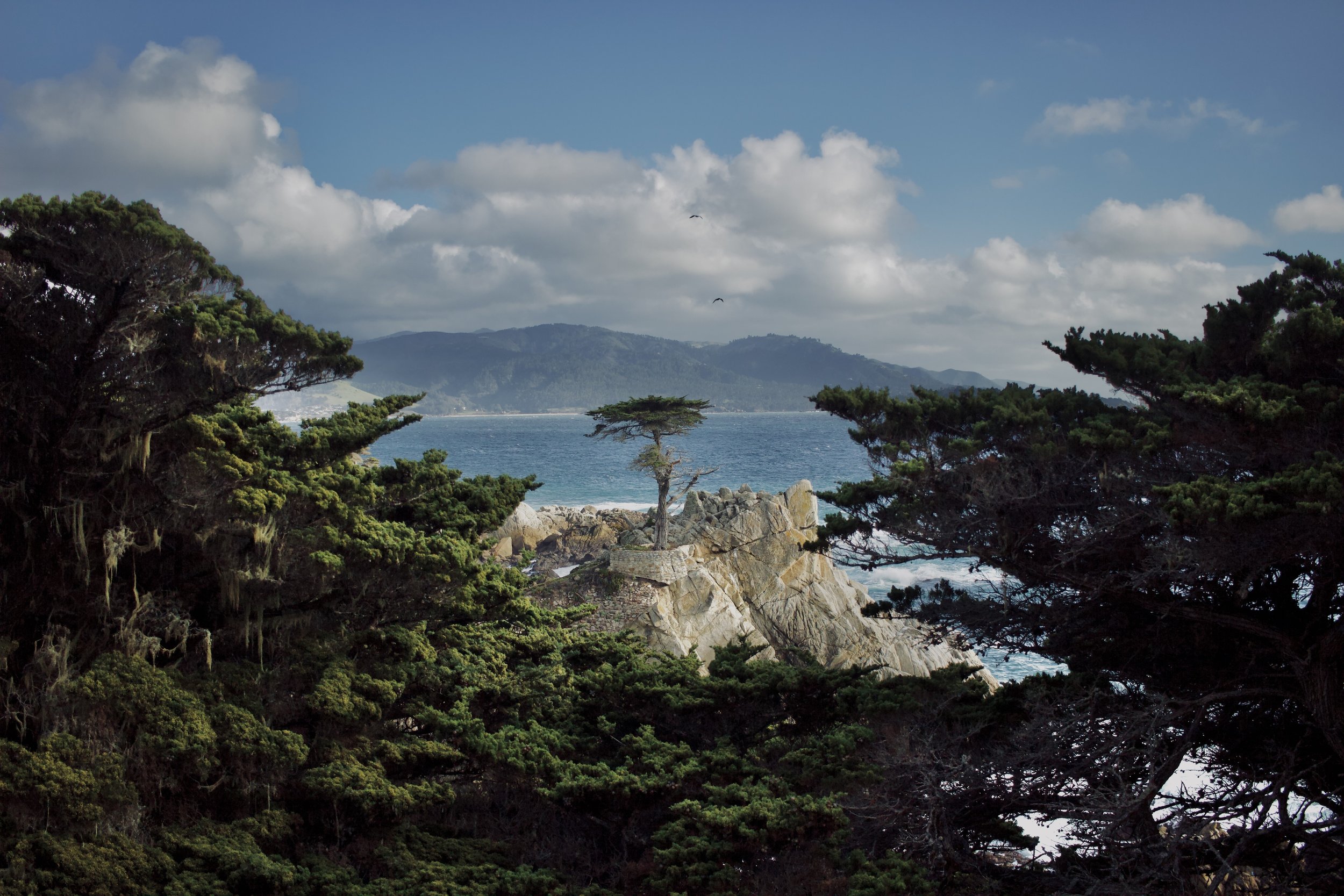
The 17 Mile Drive cuts through Pebble Beach along the water — cypress trees, ocean overlooks, and the Lone Cypress on its granite outcrop. It reads differently through a lens depending on whether the fog has lifted. Most mornings it hasn't.
Point Lobos is worth the separate stop just south of town. The light between the rocks and the tidepools at midday is some of the clearest along this stretch of coast.
Downtown Carmel is compact on purpose. The city incorporated in 1916 and has maintained strict ordinances against chain restaurants, neon signs, street addresses, and buildings above a certain height. The result is a walkable main street — Ocean Avenue — lined with independent galleries, wine bars, small hotels, and bakeries. The scale doesn't change. Nothing shouts.
Carmel Mission Basilica sits four blocks from Ocean Avenue and is easily missed on the gallery route. Founded by Junípero Serra in 1770 and the second mission established in California, the Basilica is still an active parish. Serra is buried in the church floor. The courtyard is shaded and quiet — the fountain at the center, the arcaded walkway, the garden planted with medicinal herbs used by the original mission.
Carmel Beach is a fifteen-minute walk from the center of town down Ocean Avenue. White sand at the base of a forested bluff, dogs allowed off-leash, free parking in adjacent streets. The beach faces west and the sunsets are clean and unobstructed — no development on the horizon, just water and sky. The cypress trees at the north end lean from the wind and photograph well.
Pebble Beach and the 17 Mile Drive require a $12 toll to access by car. The most famous stretch passes the Lone Cypress — a 250-year-old tree on a granite headland with the Pacific behind it. It's been photographed so many times the image has become separate from the tree, but standing in front of it returns it to something more specific.
Point Lobos State Natural Reserve sits two miles south of town. One of the most biologically diverse marine habitats on the Pacific Coast — kelp forests in the coves, sea otters floating on their backs in China Cove, harbor seals on the rocks. The South Shore Trail is the most photographically productive. Arrive at opening; the reserve caps daily visitors.
Practical notes: Carmel is expensive across the board — hotels, restaurants, gallery prices. Parking in the village is better than expected; two-hour street parking on most side streets. Point Lobos reservation recommended in peak season. The 17 Mile Drive toll is per vehicle.
More From BUTIMASIAN


