2022
Marseille
france
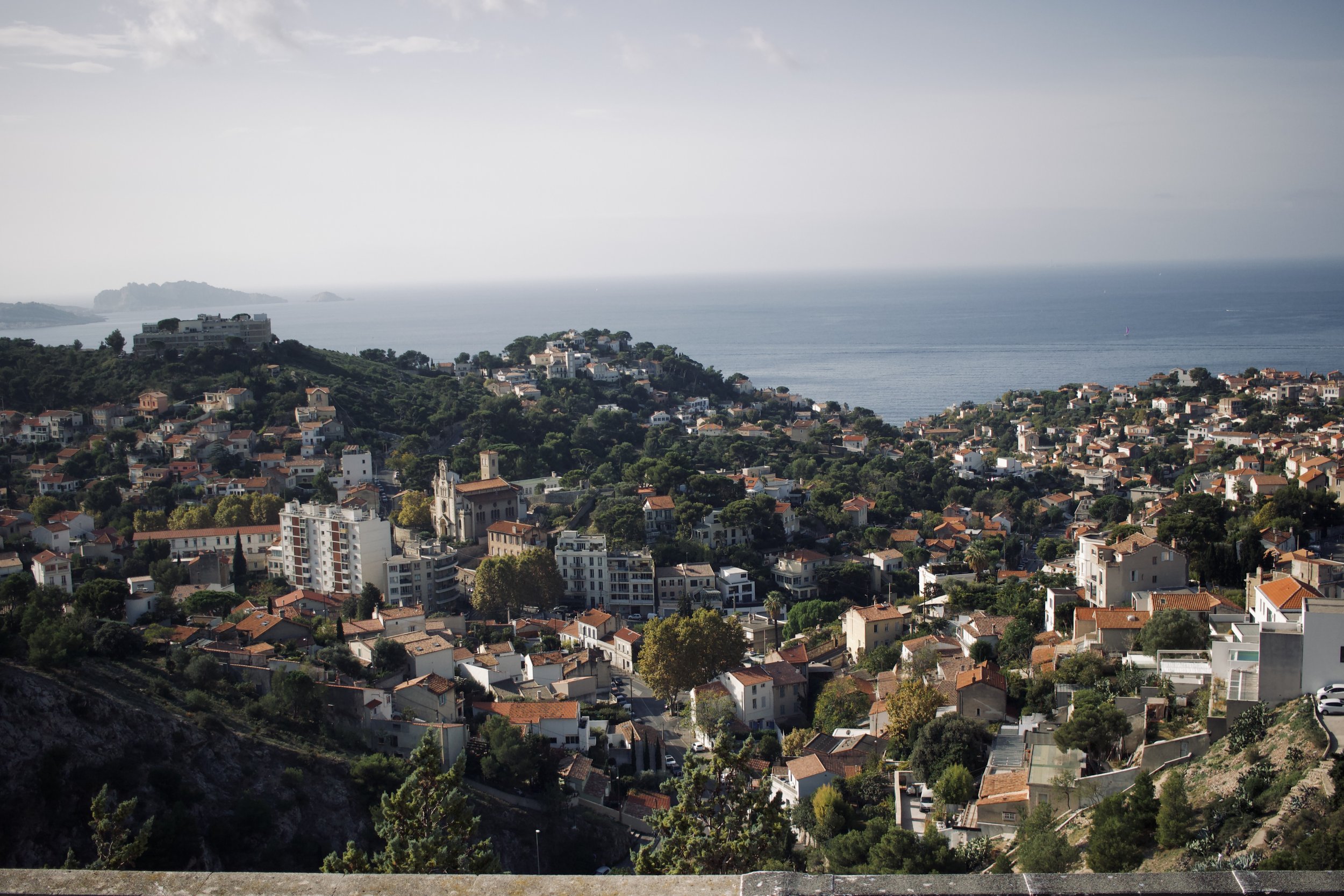
Marseille moves differently than other French cities. It's older, rougher around the edges, more itself. The Vieux-Port anchors everything — ferries, fish stalls, light bouncing hard off the water in the afternoon. From there: up the hill to Notre-Dame de la Garde, across to the cathedral, through to Longchamp. The city is compact enough to take on foot.


Palais de Longchamp
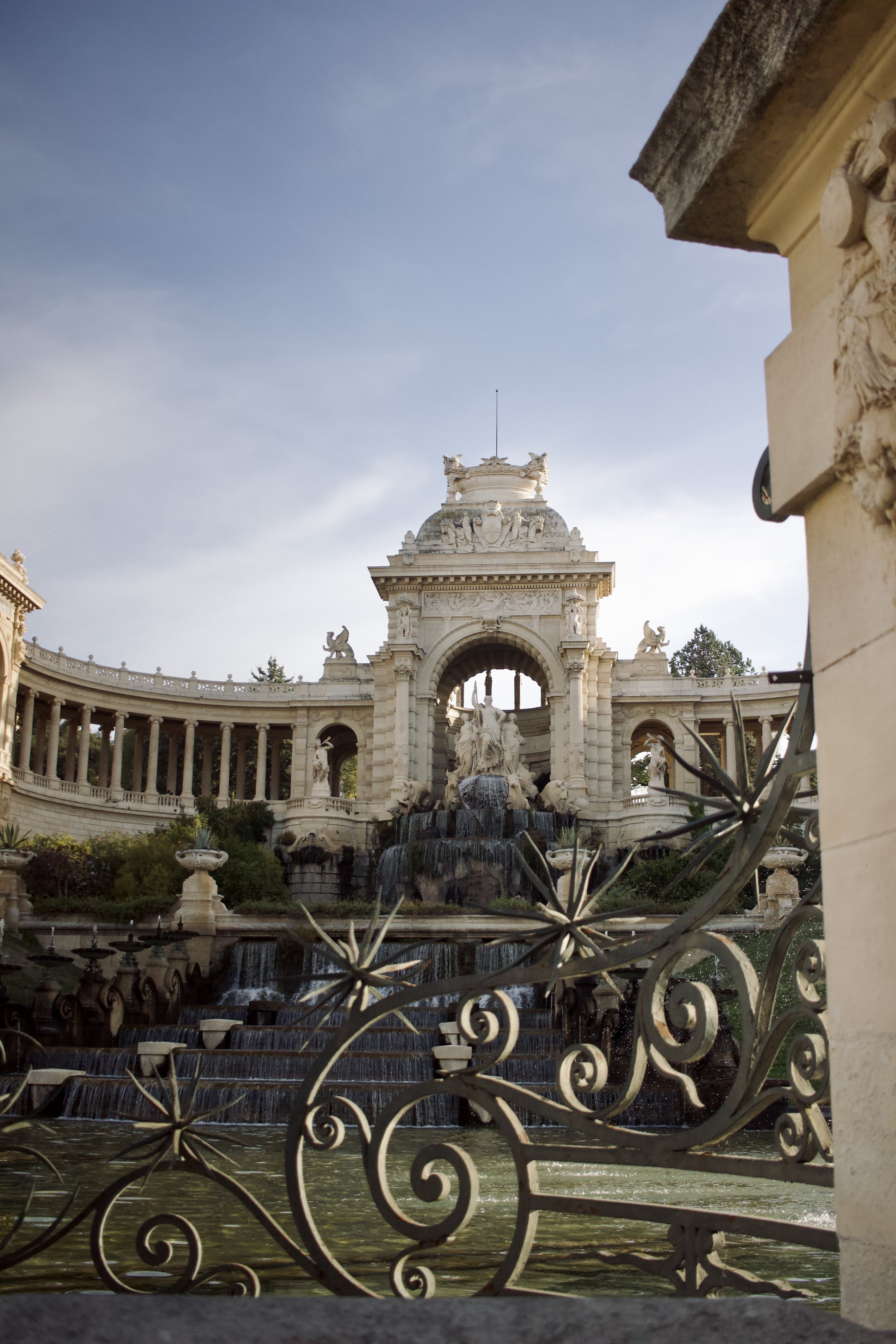
The Palais de Longchamp sits inside the city like something that escaped a different century. Built in the 1860s to celebrate the arrival of the Canal de la Vanne, it's all colonnade and cascade — water pouring down tiered fountains flanked by stone animals. The gardens behind the colonnade are quiet. Museums on either side, but the architecture is the reason to stop.
Cathédrale La Major
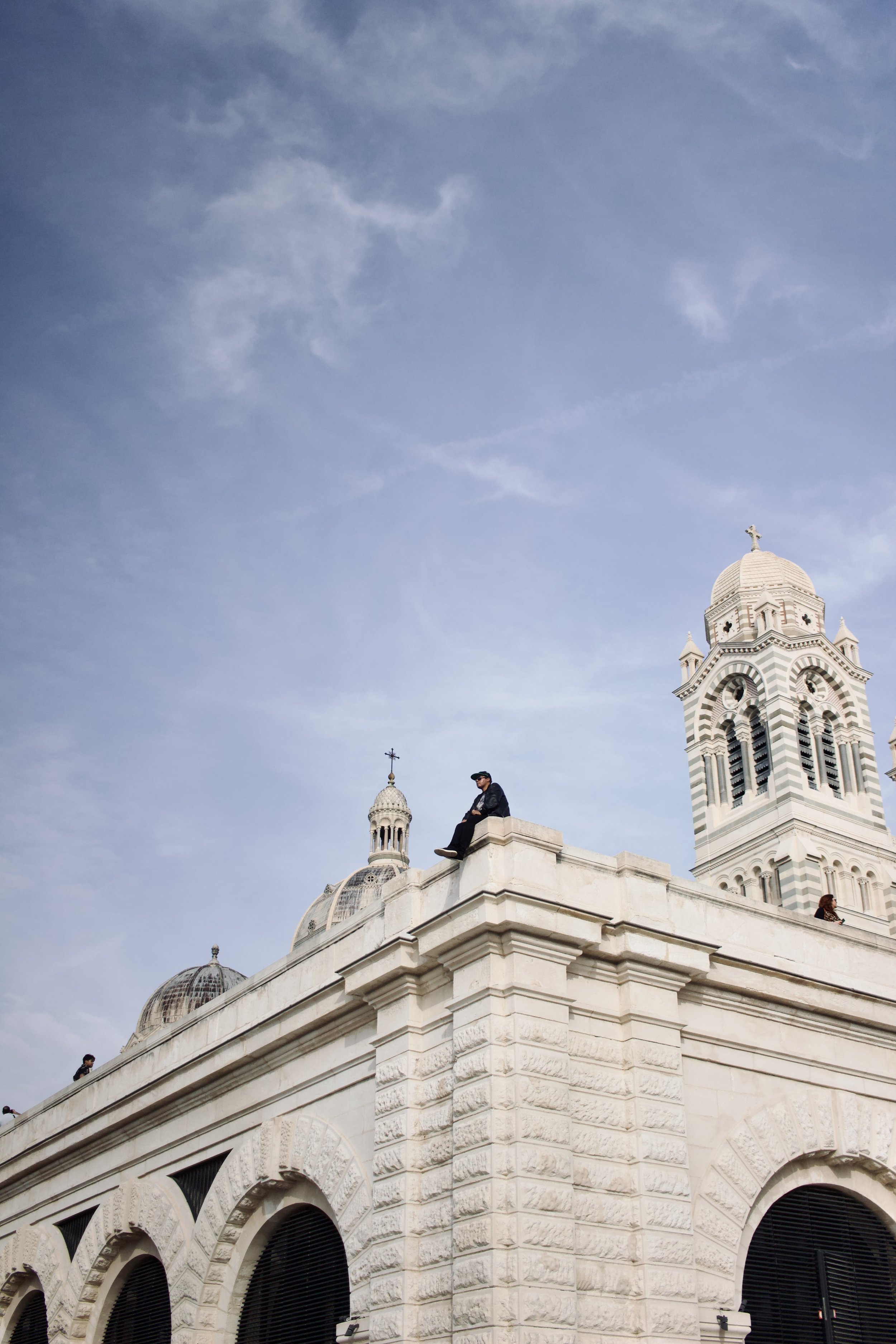
La Major is the largest cathedral in France built since the Middle Ages — completed in 1893, constructed from alternating bands of white stone and green-grey porphyry. The scale surprises you from the outside. Inside, it earns it. The Romanesque-Byzantine style holds together in a way that shouldn't quite work, but does.

Basilique Notre-Dame de la Garde
Notre-Dame de la Garde watches over Marseille from the highest point in the city. The climb is worth it — not just for the view, which extends to the sea in every direction, but for the basilica itself. The golden Madonna at the top is visible from most of the city below. Inside, sailors' votive offerings cover the walls. This is a working place, not just a landmark.
The Vieux-Port is functional before it's scenic. Early morning means fishing boats unloading the overnight catch, buyers negotiating from the quay. The smell is honest. By 10am the fish stalls have cleared and the cafés are open — boats floating quietly, locals walking dogs, the Basilica visible on the hill. The same place at 7am and at noon are two different experiences.
The Panier district climbs the hill north of the port. It's the oldest neighborhood in Marseille — narrow streets, buildings that lean toward each other, laundry strung between windows. Street art covers walls and stairways, some commissioned, some not. The Vieille Charité — a 17th-century poorhouse turned museum — sits in the middle of it. The baroque chapel at the center is worth the entrance fee even if you skip the museum.
The Calanques are twenty minutes from the city center by bus and another twenty on foot. These are steep limestone inlets that drop directly into the Mediterranean — narrow, deep, the water a shade of blue that seems overexposed in photographs but is accurate. Calanque de Morgiou and Calanque de Sormiou require a 45-minute hike each way; the views from the path are the reason to go, not just the water at the bottom.
Bouillabaisse is a thing here in a way it isn't anywhere else. The original recipe requires a specific list of Mediterranean fish — scorpionfish, red mullet, John Dory among others — along with saffron and rouille on toasted bread. Served in two courses: broth first, fish after. Several restaurants near the Vieux-Port make a version worth ordering. It's not a quick or cheap meal, and it's not supposed to be.
The Corniche Kennedy runs along the coast south of the Vieux-Port. The road passes the Vallon des Auffes — a small fishing port tucked beneath a bridge, a handful of boats, a restaurant on the water. Easy to miss from the main road, easier to spend an hour at than expected.
Practical notes: Marseille is not a city that presents its best face immediately. Give it a second day. The Calanques trail requires walking shoes, water, and an early start in summer. Keep standard urban precautions in the Belsunce quarter near the train station.
More From BUTIMASIAN
