2024
Morocco
Africa
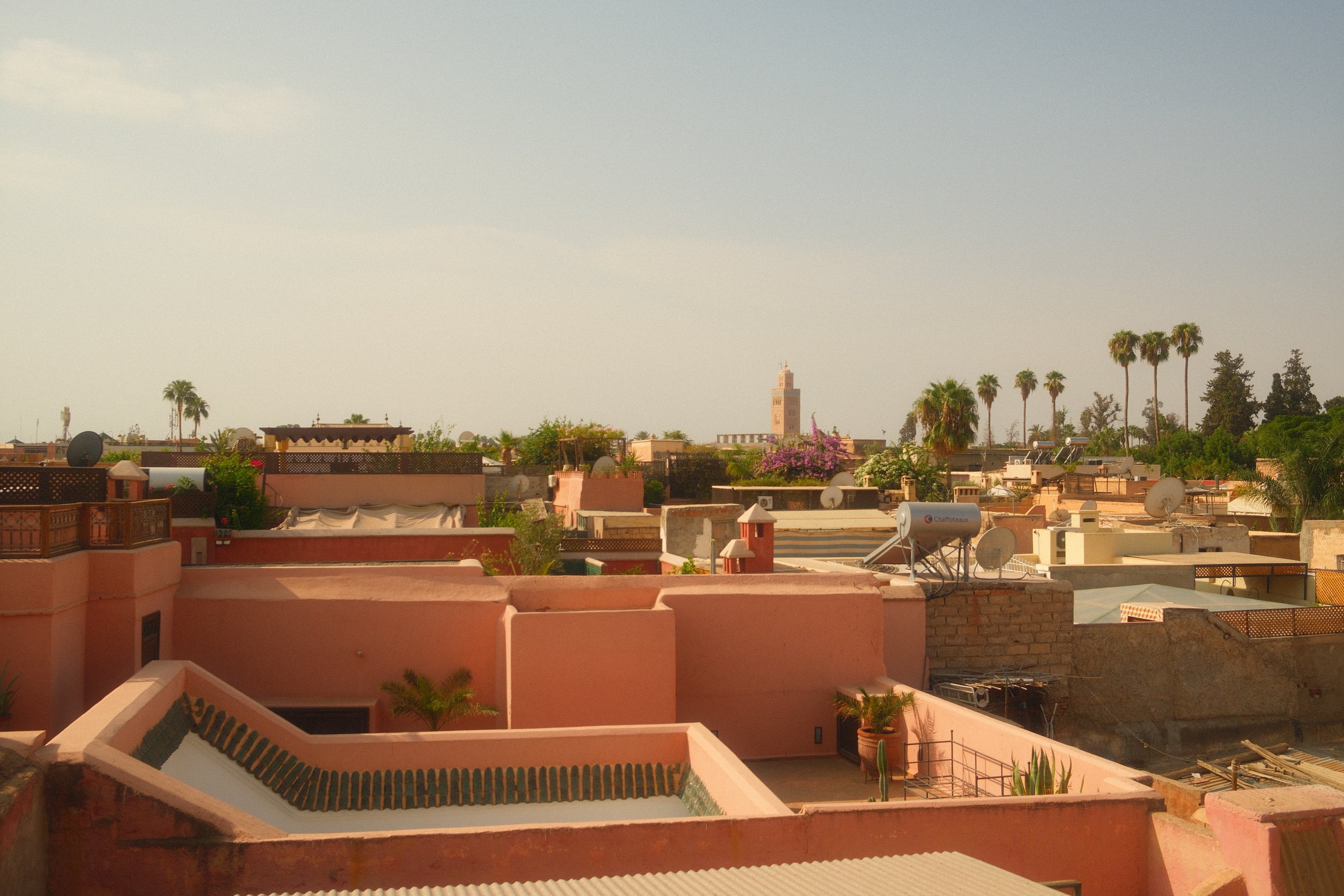
Morocco moves at a pace you don’t expect. Marrakech draws you in slowly — the medina’s walls the color of dry clay, the souks narrowing into corridors of dyed wool and hammered copper. Casablanca sits quieter against the Atlantic, more modern, less theatrical. Both cities carry their own weight. Between them, there’s a lot to look at.
Le Jardin Secret is tucked deep enough into the Medina that finding it feels like an accident. Inside, the scale shifts — wide symmetrical pools, geometric tile, a stillness that feels earned after navigating the streets outside. Turtles move slowly across flat rocks. The architecture frames nature without overpowering it. It’s the kind of place where you stop moving and just watch for a while.


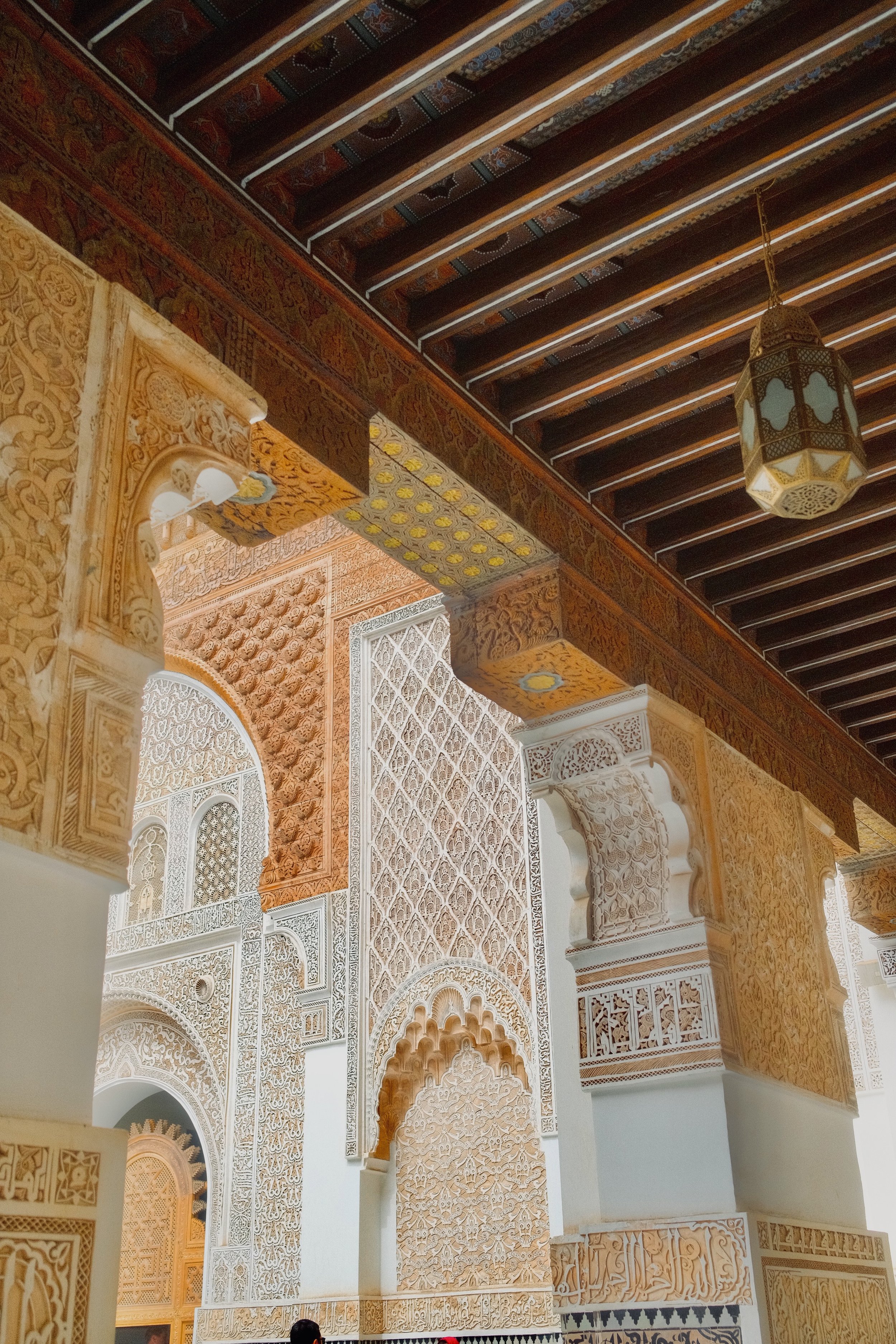
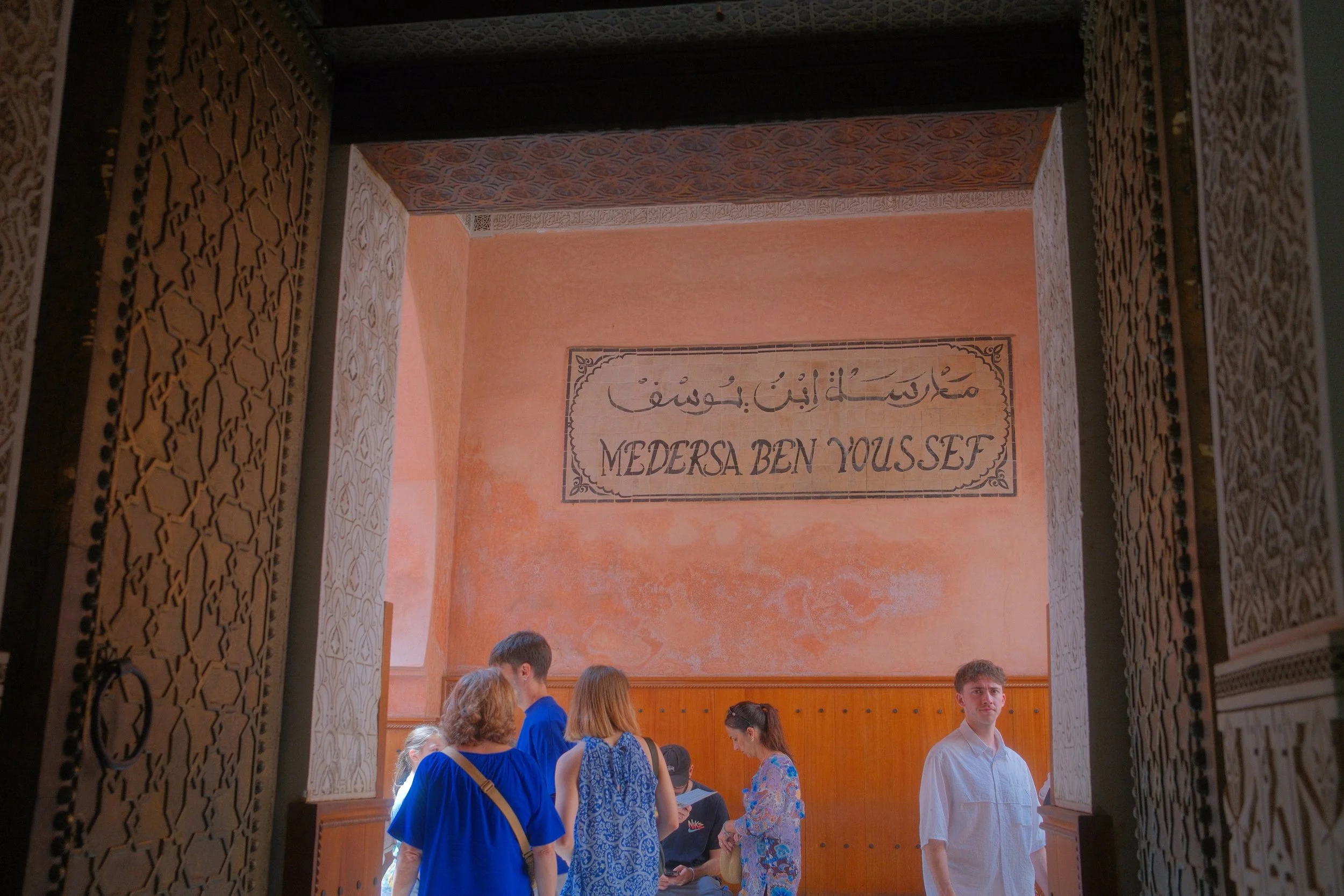
Ben Youssef Madrasa was built to teach, and even empty, it still instructs. Every surface carries something — carved cedar, painted plasterwork, Zellige tile stacked in geometric columns that pull the eye upward. At midday, light bounces hard off the courtyard. It flattens everything at first, then slowly reveals the depth in each layer of detail. Shooting your own reflection in a column of tile is almost unavoidable.

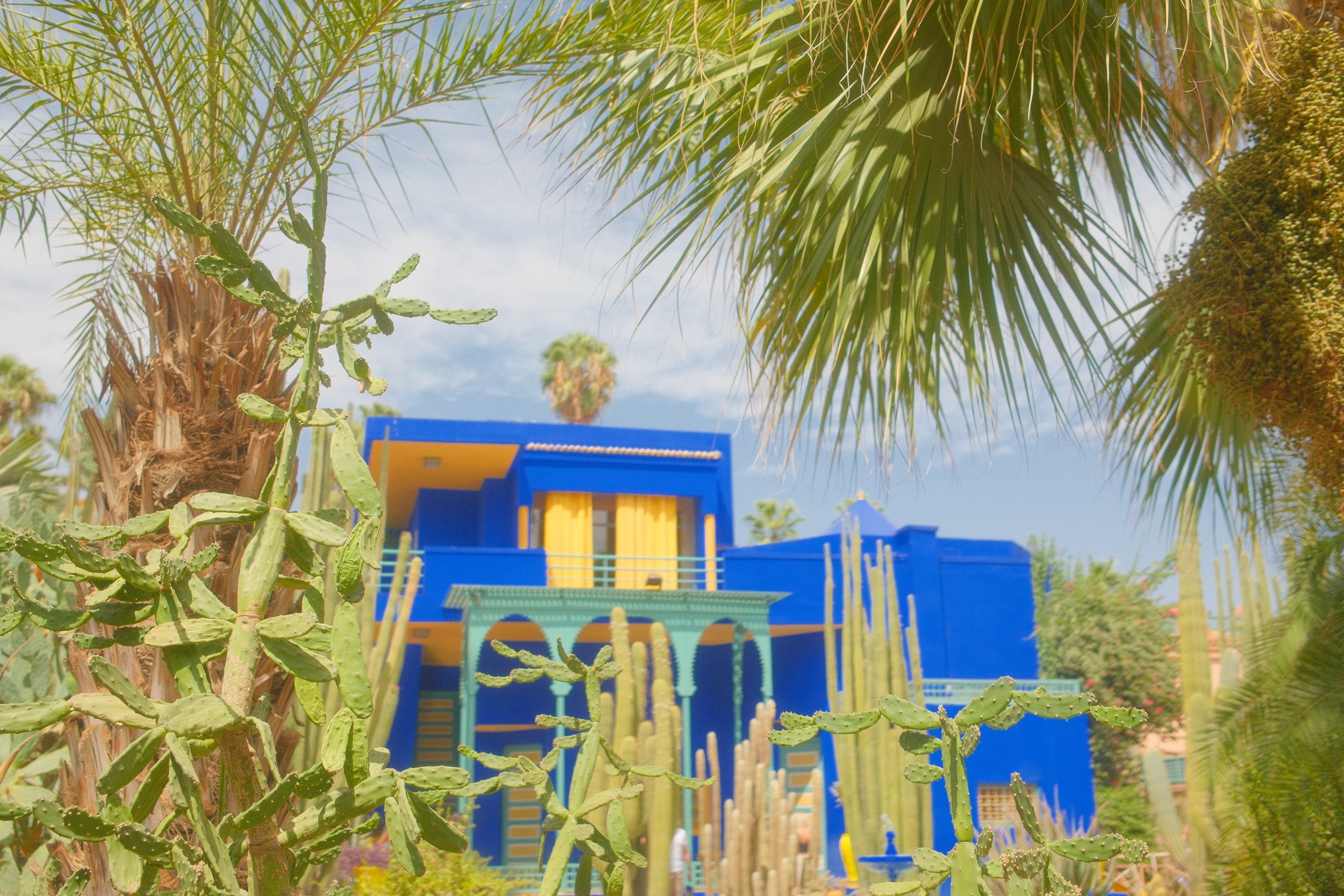

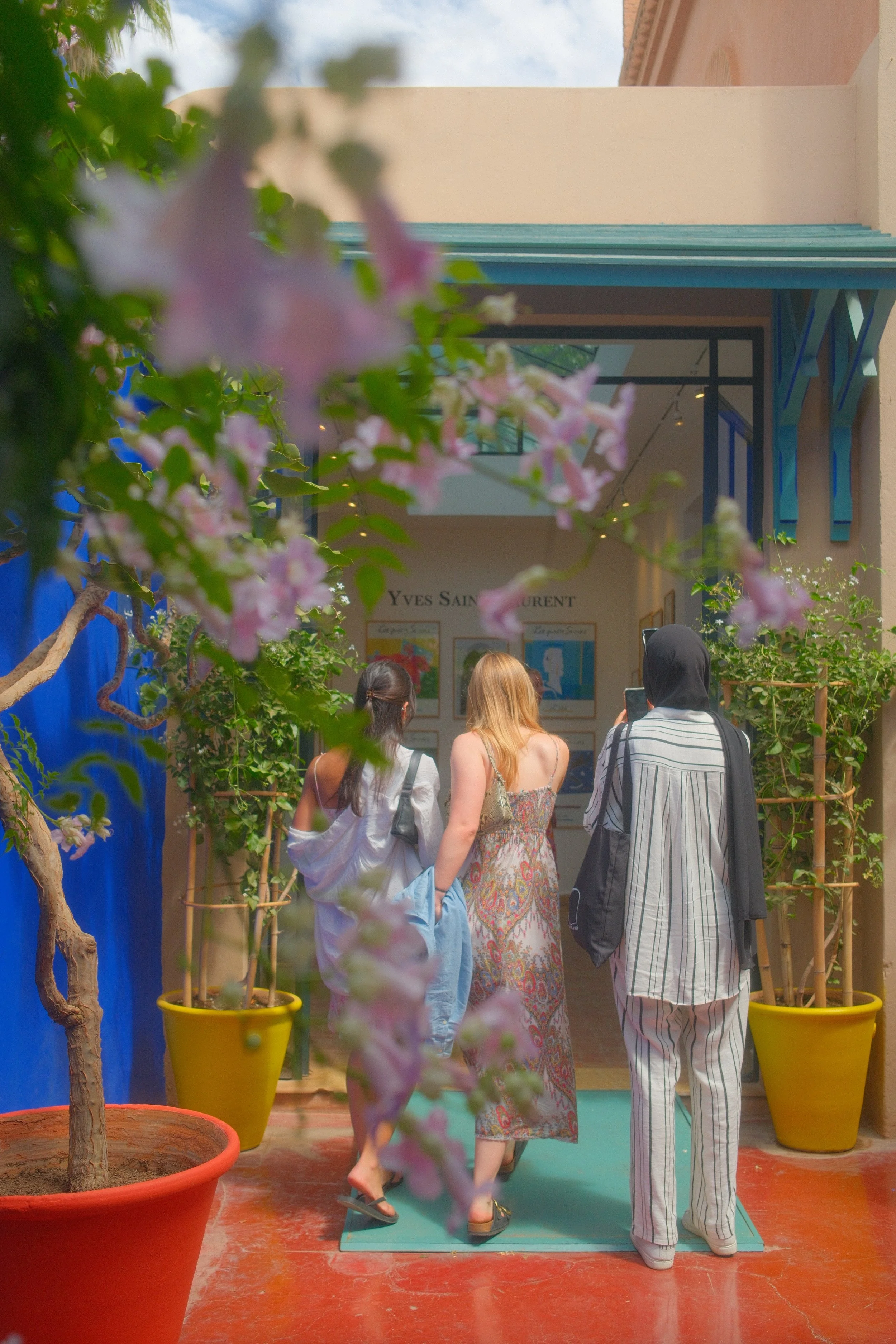
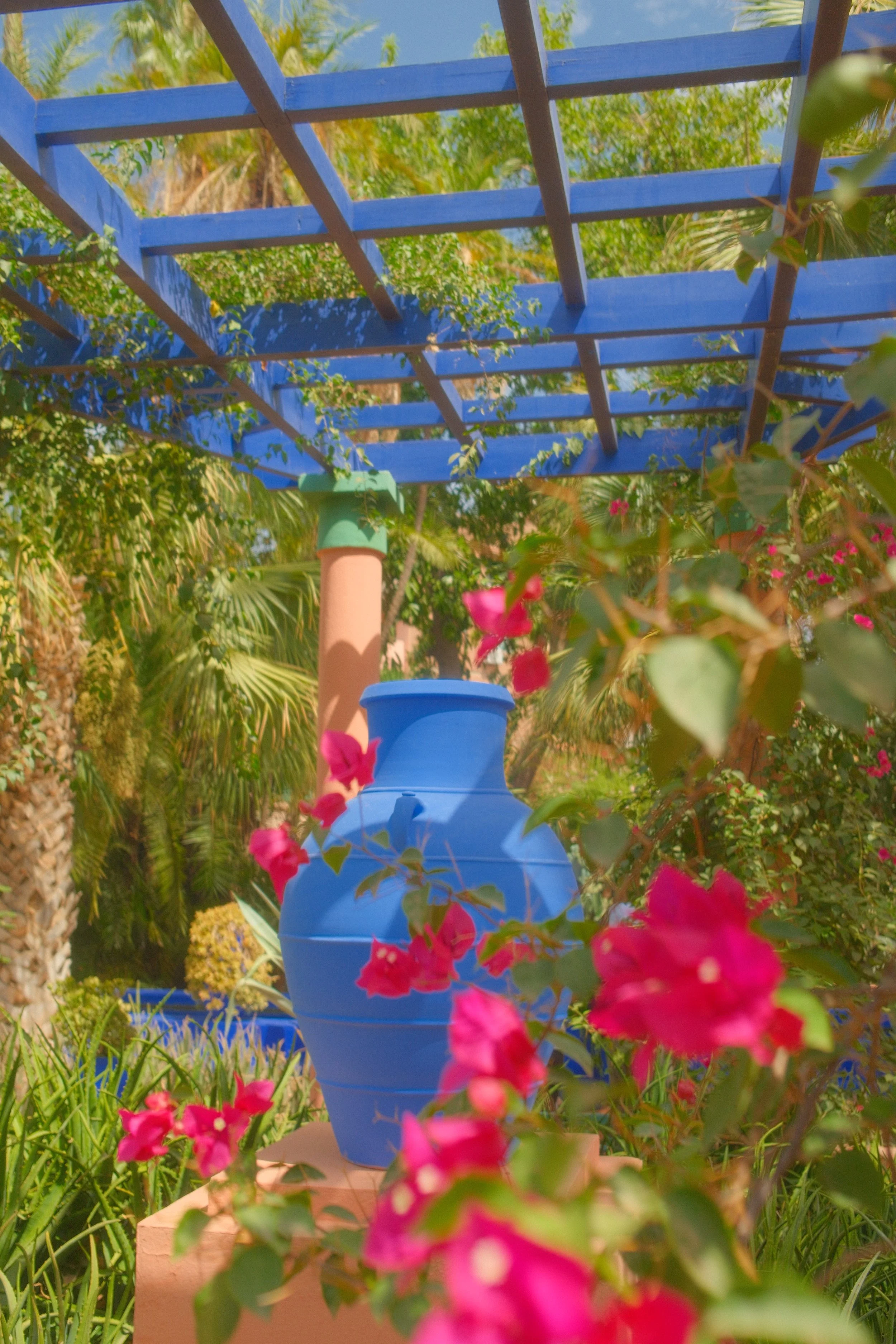
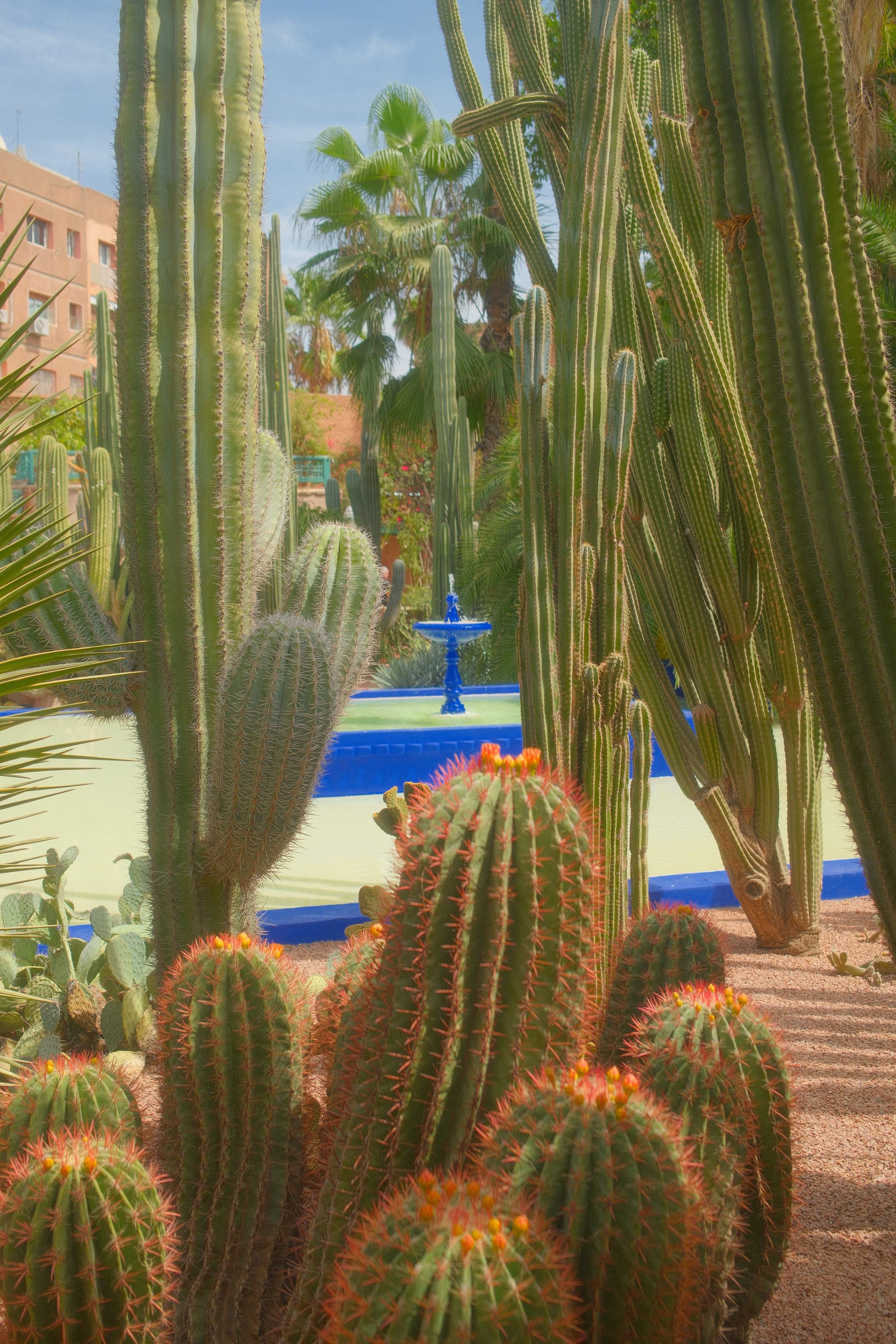
Jardin Majorelle is a study in contrast — Majorelle blue against cactus green, shadow and open sky. Jacques Majorelle built it in the 1920s; Yves Saint Laurent later preserved it, and his presence still reads in the quiet, deliberate way the garden is kept. The Berber Museum inside is worth the time. The colors here don’t need a filter.



The Agafay Desert sits about an hour outside Marrakech, and the landscape shifts fast on the way there. Rocky plateaus replace the city’s noise. We rode camels across the terrain in the late afternoon, the light long and amber across the stone. At night, the sky opens up. Dinner in a tent, fire burning low — it’s a different kind of quiet than the gardens.


Arab League Park is where Casablanca slows down. Locals come to sit, not to sightsee — the trees are broad, the paths wide, the energy low. A good place to watch the city at its own pace.


The Hassan II Mosque stands at the edge of the city on the Atlantic coast. Its minaret is one of the tallest in the world, and standing beside it, the scale actually registers. Carved stone, geometric tile, water beneath a glass floor — architecture that takes itself seriously, and it should.

