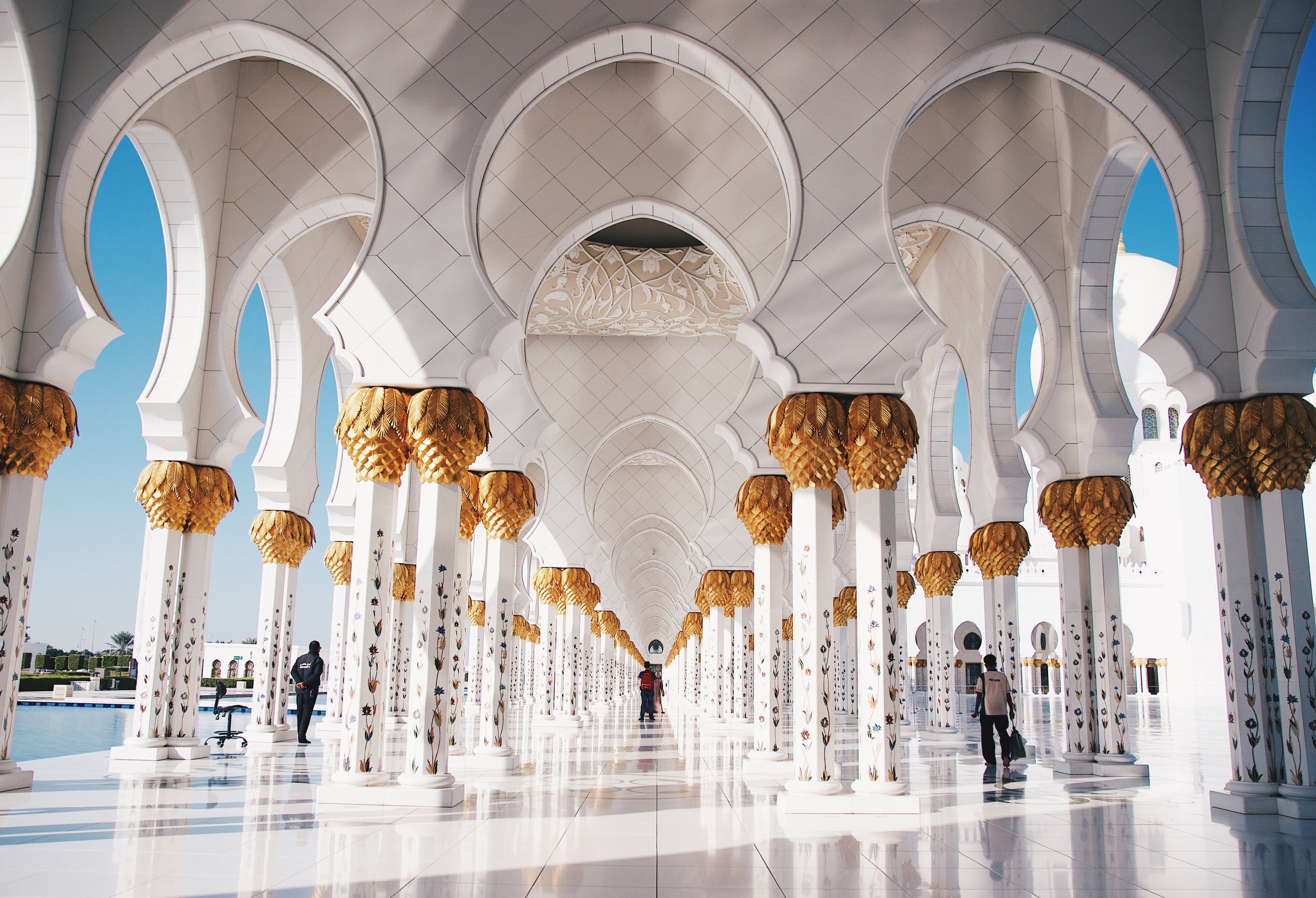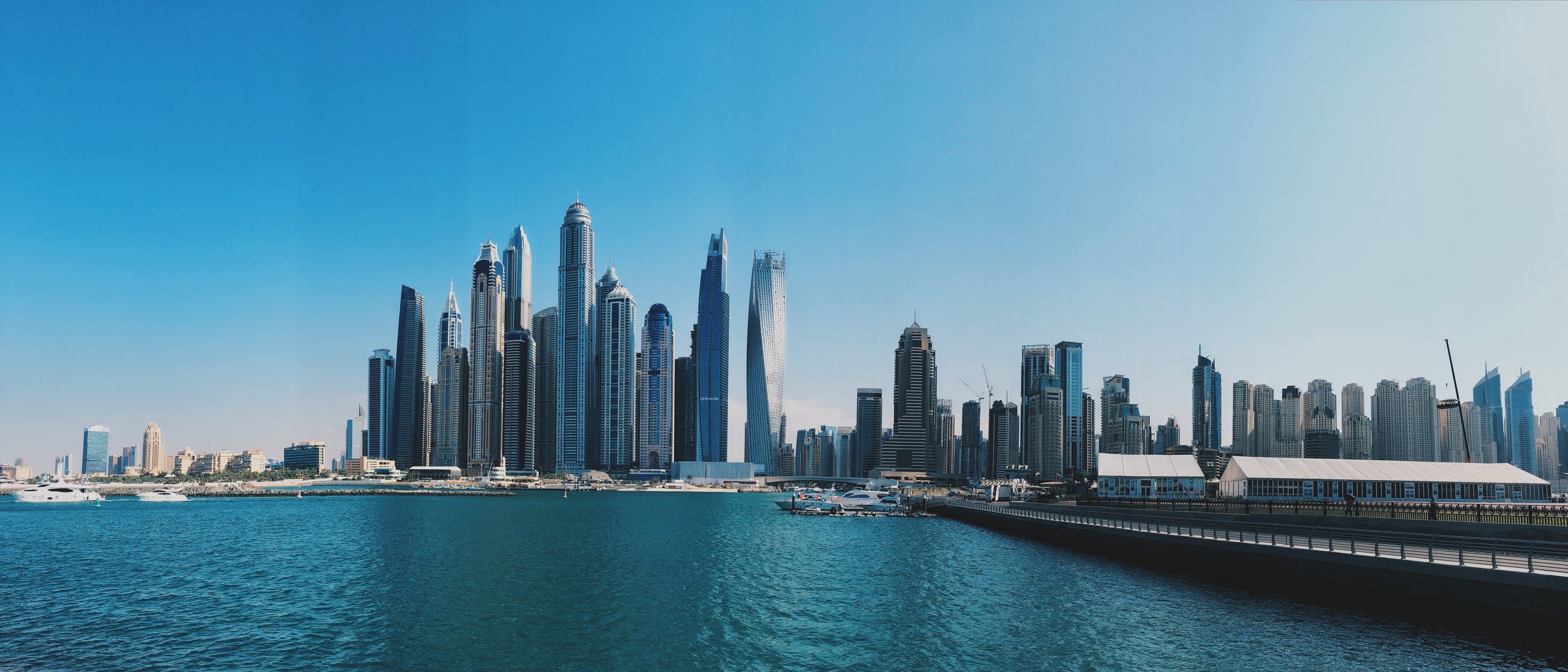
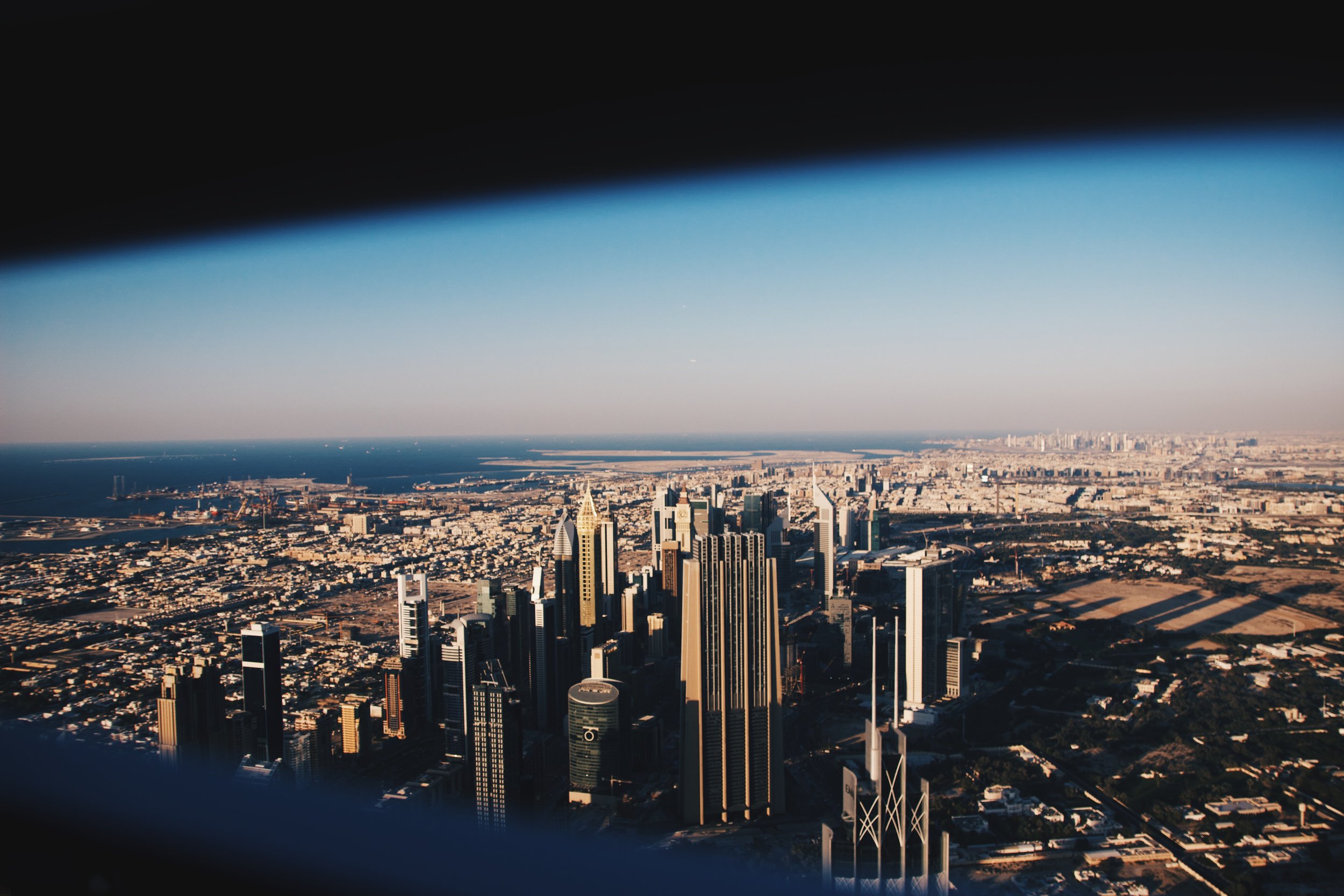
Dubai in January 2018 — a week split between the city's towers and Abu Dhabi's quieter pace. The Burj Khalifa observation deck at 555 meters gives the clearest view of how the city is organized: the Palm laid out in the water below, the desert visible at the far edge. Skydiving over The Palm that same trip confirmed it from a different altitude — the shape of the island is more legible from the air than from any ground-level vantage point. Abu Dhabi's focal point is different. The Sheikh Zayed Grand Mosque is white marble and open light, a space that slows you down without trying to. Two cities, two different ways of occupying space.
2018
UNITED ARAB EMIRATES
Dubai reaches up. Abu Dhabi holds still. Both are worth the time.
Dubai registers differently depending on which layer you're looking at. The skyline along Sheikh Zayed Road is a vertical collection of architectural ambition — the Burj Khalifa at 828 meters, the twisted Cayan Tower, the Jumeirah Emirates Towers. From a distance, the composition is arresting. Up close, each building is its own statement, competing rather than cohering.
The Burj Khalifa earns the visit. The At The Top observation deck on floors 124 and 125 gives a view across the city to the desert on one side and the Gulf on the other. The scale of Dubai's infrastructure from this height is clearer than from any other vantage — the highways, the Palm Jumeirah offshore, the empty space between developments. The city is still mid-construction in multiple directions.
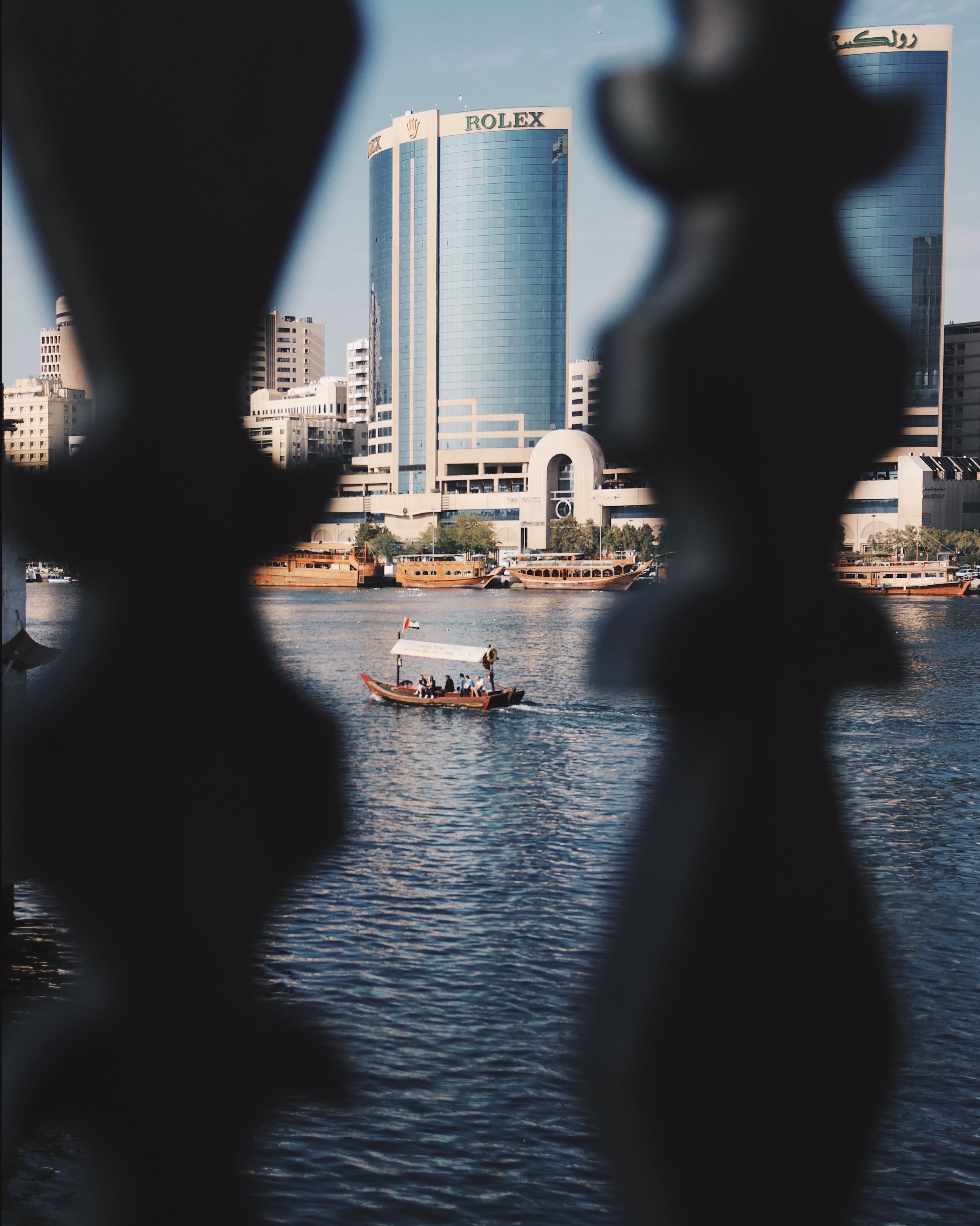
The Dubai Creek runs through the older part of the city, dividing Deira from Bur Dubai. The abra water taxis cross for 1 dirham — a two-minute ride that puts you in a different urban register entirely. The Gold Souk and Spice Souk sit in Deira on the north bank. The Spice Souk is smaller and more photogenic — sacks of dried limes, saffron, frankincense — and the vendors are straightforwardly friendly compared to the sales pressure in other parts of the city.
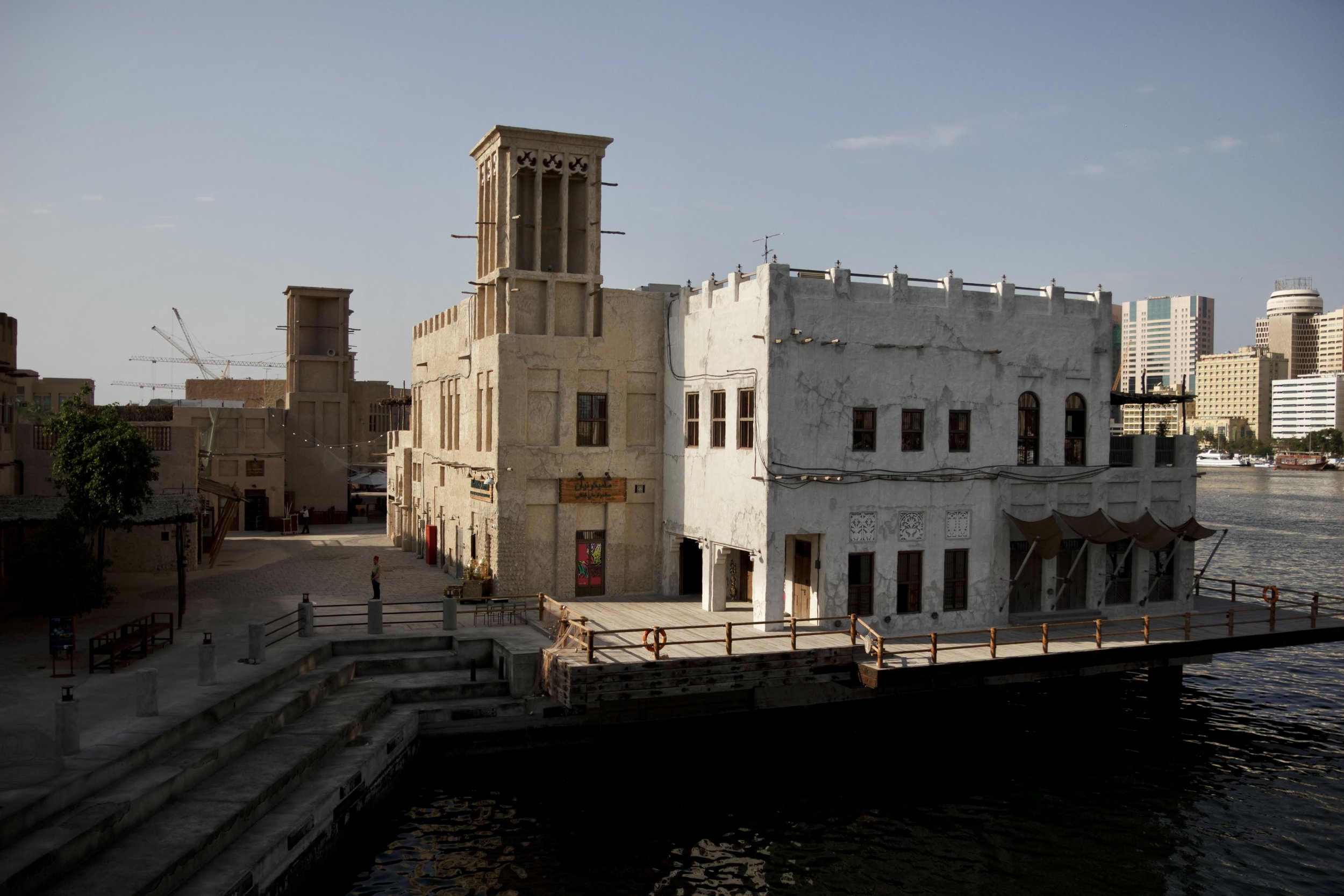
Al Fahidi Historical Neighbourhood, also called Al Bastakiya, preserves the pre-oil wind tower architecture of old Dubai. The lanes are narrow and covered, the buildings made of coral stone and gypsum. The Dubai Museum occupies the Al Fahidi Fort at the district's edge — the ground floor gives a clear, efficient summary of what Dubai was before 1960.
Abu Dhabi, 90 minutes south on the E11 highway, is architecturally quieter and worth the trip for the Sheikh Zayed Grand Mosque. The mosque is white marble, 82 domes, space for 41,000 worshippers. Non-Muslims can visit outside prayer times; modest dress is required and abayas are available for loan at the entrance. The interior is large in a way that requires adjustment.
Practical notes: Dubai operates on Friday-Saturday weekend. Alcohol is available in licensed hotels and restaurants; public consumption is illegal. The Dubai Metro covers the main tourist corridor efficiently — the Red Line from the airport to the Marina. Dress modestly outside hotels and malls, particularly in older neighborhoods. Summers are genuinely extreme; November through March is the right season.
More From BUTIMASIAN

-
The Burj Khalifa
Dubai Mall
Burj Al Arab
The Palms
Al Seef
Old Souk
Tolerance Bridge
Dubai Marina
Sheik Zayed Mosque
-
Skydive Dubai
Top of the Burj
Desert Safari
Dubai Aquarium
The Frame
Dubai Glow Garden